


When many parents hear "STEAM," their first reaction might be, "Does it mean my child has to learn very difficult scientific knowledge?" or "Are there expensive courses involved?" In fact, STEAM is not a label for children to learn difficult problems ahead of time. Instead, it is a learning approach that integrates Science, Technology, Engineering, Arts, and Mathematics to solve real-world problems. It is more like a "thinking operating system": when faced with a challenge, children learn to actively observe, form hypotheses, experiment with their hands, iterate on improvements, and gain the confidence to present their findings in their own way.
Cultivating children's STEAM thinking from an early age can not only foster their curiosity but also lead them onto the path of lifelong learning and achievement.
STEM and STEAM: Different but Complementary
What's the difference between STEM and STEAM? The main difference lies in whether they include art.
STEM (Science, Technology, Engineering, and Mathematics) focuses on technical and analytical skills.
STEAM (Science, Technology, Engineering, Arts, and Mathematics) builds upon STEM and incorporates elements such as design, storytelling, and creativity. This integration enables children to view problems from multiple perspectives, combine logic and creativity, and develop comprehensive solutions.
What Are the 7 Core Elements of STEAM?
- Inquiry-Based Learning: Encouraging curiosity and asking questions.
- Collaboration: Working effectively with others to solve problems.
- Creativity: Using imagination to design and innovate.
- Critical Thinking: Analyzing and evaluating information to make decisions.
- Problem Solving: Finding innovative solutions to challenges.
- Interdisciplinary Learning: Integrating science, technology, engineering, arts, and mathematics into a cohesive curriculum.
- Reflection: Reviewing successes and failures and learning from them.
8%
Projected growth for STEM/STEAM occupations (2020-2029)
3.4%
Growth rate for non-STEM occupations
$86,980
Median annual salary for STEM/STEAM occupations
$39,810
Median annual salary for all occupations
Why Is It Important to Cultivate STEAM Thinking?
Fostering children's STEAM thinking is laying the foundation for their future learning abilities and career competitiveness.
A report by the U.S. Bureau of Labor Statistics predicts that from now to 2029, employment growth in STEM (science, technology, engineering, and mathematics) and STEAM-related occupations will reach 8%, while the growth rate for non-STEM occupations will be only 3.4%. The report also points out that the median annual salary of STEM/STEAM occupations is $86,980, while the median annual salary of all occupations is only $39,810. This means that children with STEAM literacy will have a greater advantage in terms of income and development opportunities in the future.
Even for students who do not choose a career in the STEM/STEAM field, the skills they gain from STEAM education can be transferred to almost any career.
Therefore, no matter what career your child chooses in the future, cultivating STEAM thinking can prepare them for life. STEAM itself can teach children many very important skills that can be applied to other aspects of their lives and will be beneficial for their entire academic and career journey.
How to Cultivate Children's STEAM Thinking
Now that we understand what STEAM is and why it's important, how can we cultivate it in our children? It doesn't require labs or expensive tools. There are many fun and simple ways to integrate STEAM into daily life, such as building simple devices, trying baking (which involves math and chemical knowledge!), or exploring art in nature. Keep reading to discover more activities, experiments, and fun ways to nurture STEAM thinking!
Here are some simple and easy ways to reinforce STEAM concepts at home:
Building Block Games
Constructing various structures with building blocks is a great way to introduce STEAM principles. Set open-ended challenges, such as constructing a functional device with LEGO blocks—maybe a bridge or a castle? How many blocks will be needed? How long will it take?
Math Challenge
Solve math problems related to real-life budgets or expenses. For example, how to plan a family dinner with a $20 budget?
Household Chores
While tidying up a room, how should we categorize and optimize the space for better arrangement? How are they classified? (Logic and Geometry)
Gardening
Plant seeds with your children, observe the life cycle, measure plant growth, and learn about photosynthesis and ecosystems. Alternatively, you can choose our kids' instant print camera to record the plant's growth process with photos.
Baking
Making desserts together not only makes parent-child time more fun, but it can also cleverly incorporate a delicious lesson in measurement. How much is one tablespoon? How much is one cup? What units do we use to measure liquids? How much ingredient do we need?
Nature Gathering
Collect some natural items such as leaves, flowers, nuts, and seeds during your walks. Discuss where they come from, why they grow the way they do, and what they can be used for. Share what you see in real time with friends using a kids’ video walkie-talkie. Check out our latest product, the CT-W1, an outdoor adventure tool designed specifically for children.
Coding Games
Introducing basic programming concepts through fun online games designed specifically for children. Examples include coding education apps like Tynker. With its interesting and step-by-step teaching design, it has become a globally popular children's programming learning platform. Currently, it has been adopted by over 150,000 schools worldwide and attracted more than 100 million students to use it.
Turning Waste into Treasure
A Perfect Blend of Engineering and Art! Set up a small box and put some simple tools and recycled materials inside, such as old toys, empty milk bottles, paper cups, straws, and tape. Let children know that "this box can be opened when they want to try something." These seemingly ordinary items are excellent materials for children to observe, compare, and create.
Stargazing
Plan an evening for stargazing, an excellent way to introduce children to astronomy concepts. For younger children, guide them to use a telescope. SkyView Lite is a great educational app for children aged 10 and up, allowing them to point their smartphone cameras at the night sky and learn about stars, constellations, and satellites. With this app, a smartphone becomes a portable planetarium, making astronomy fun and interactive!
Hands-On STEAM Experiments
Rainbow Milk Experiment
Age: 5-10 years old
Materials:
Whole milk, plate, several food colorings, cotton swabs, dish soap
Steps:
1
Pour a little milk into a plate, just enough to cover the bottom of the plate.
2
Add a few drops of food coloring to the center of the milk. For the best effect, it's best to add several different colors!
3
Apply a small amount of dish soap to a cotton swab and gently dab it onto the center of the food coloring drops.
4
Now you can observe the colors spreading rapidly in the milk, swirling to form a rainbow pattern! (If you want to try again, you need to pour out the milk and start over.)
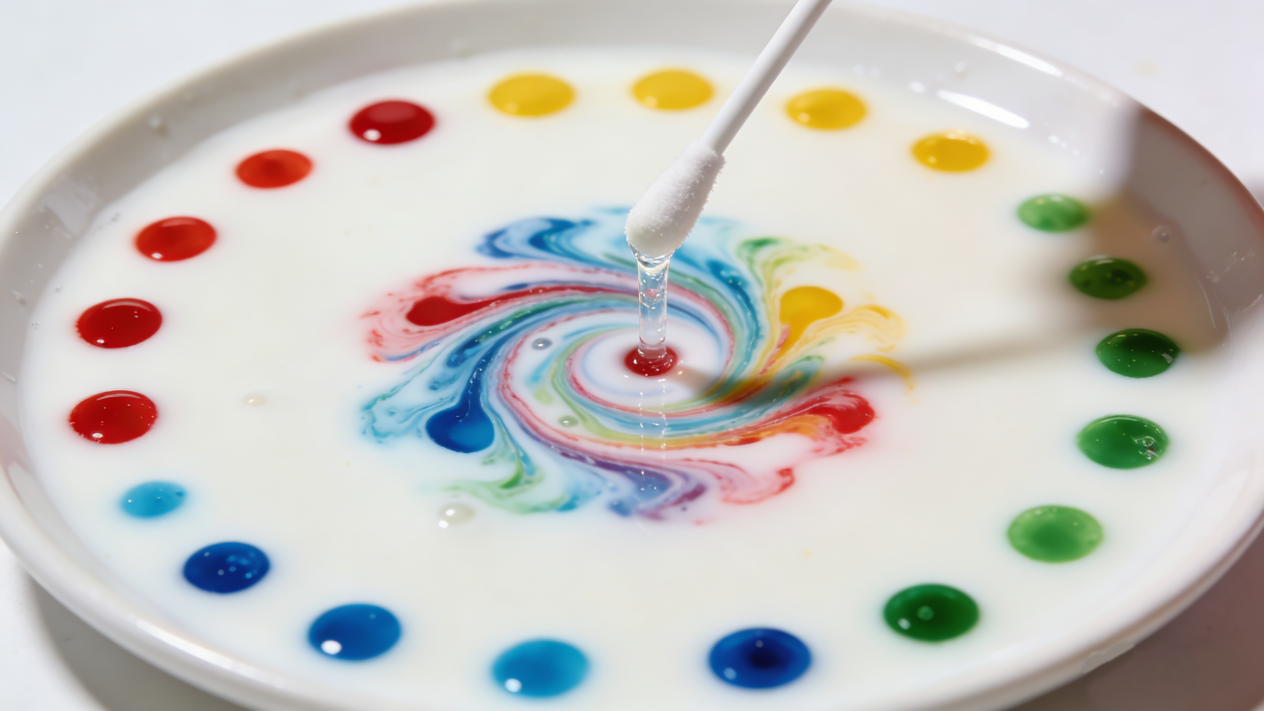
Explanation: Why do the colors spread out? The secret lies in that tiny drop of dish soap. Each molecule has a hydrophilic end, meaning it likes water. This end easily dissolves in water. The other end is hydrophobic, meaning it dislikes water and won't come into contact with water molecules, but it easily adheres to oil. This is precisely the principle behind the milk "explosion." Besides water, milk contains a large amount of fat and protein. Like oil, fat and protein molecules also easily combine with hydrophobic molecules. When dish soap comes into contact with milk, it adsorbs as many fat and protein molecules as possible. The attraction causes these molecules to move rapidly, creating the colorful explosion effect you see.
Paper Bridge Load Test
Make a paper bridge using A4 paper and a glass cup , then test your building skills to see how much weight your structure can support.
Age: 6-12 years old
Materials:
2 sheets of A4 paper, several coins, two glass cups
Steps:
1
Fold two A4 sheets of paper into different shapes (wavy shape, cylindrical shape).
2
Place two glass cups on the table, 15 centimeters apart.
3
Place the folded paper on top of the glass cups to form a "bridge."
4
Gently place coins onto the "bridge" and record the maximum number of coins each shape can support.
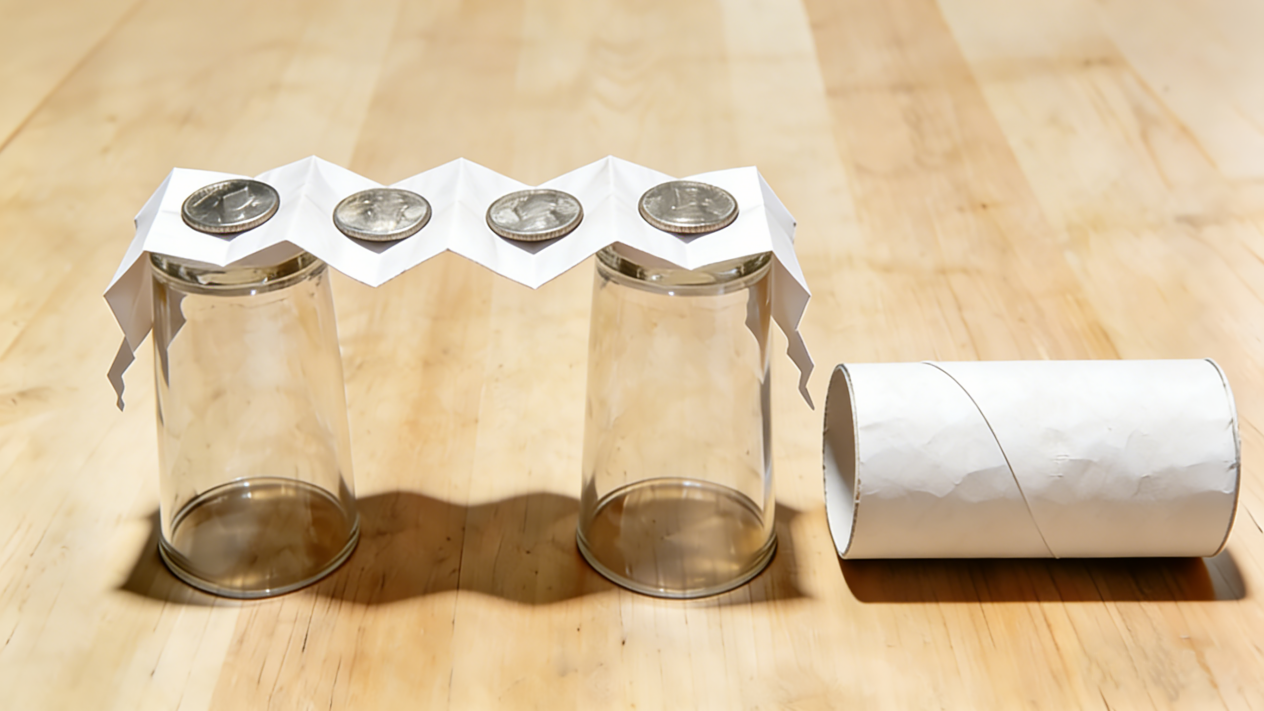
Explanation: Paper bridges of different shapes have different load-bearing capacities due to principles of structural mechanics . Wavy and cylindrical shapes, by increasing support points and distributing weight, can support more coins, which is why these shapes are often used in architecture and bridges.
Plant Water Absorption Experiment
Has the child ever wondered how plants transport water? This simple experiment demonstrates how colored water is transported upwards along the stems of plants!
Age: 5-11 years old
Materials:
a few stalks of celery, several clear cups, water, food coloring
Steps:
1
Pour the same amount of water into several transparent cups.
2
Add food coloring of different colors to each cup of water and stir.
3
Cut the bottom of the celery stalk at an angle and insert it into cups of different colors.
4
Let it stand for several hours or overnight, then tear apart one or two celery stalks to better observe how the color spreads throughout the stalk.
5
Look at the celery stalks! Some dotted colors should start to appear at the ends of the celery stems!
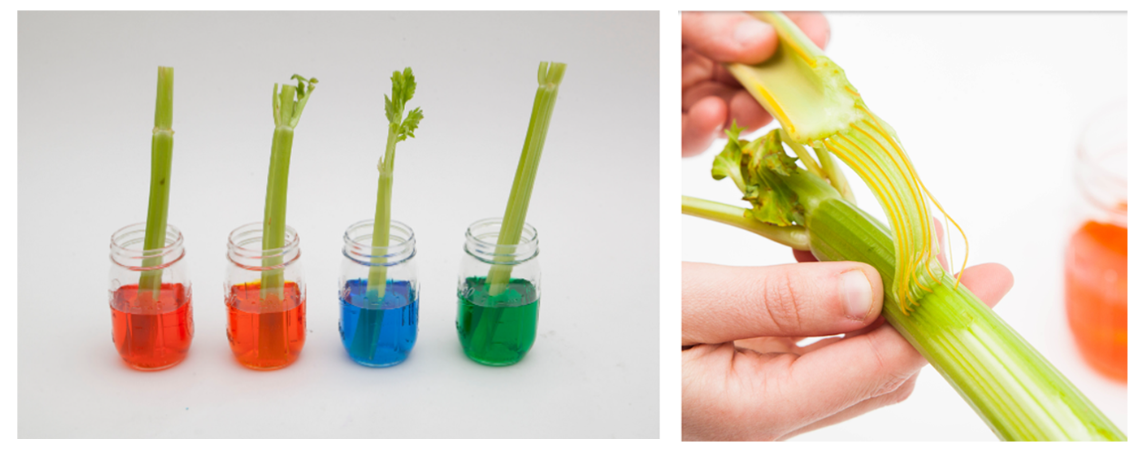
Explanation: Celery transports water from the roots to the leaves through vascular bundles in its stems. The dyed water rises along these vascular bundles and leaves color.
Children can observe how plants "drink water" and transport nutrients, and connect this to how trees transport water to their tall canopies. Try comparing celery with leaves and celery without leaves—which one changes color first?
Baking Soda Volcano Experiment
Age: 5–12 years old
Materials:
small cups, tray, baking soda, vinegar, food coloring
Steps:
1
Place the cup on the tray and add 2–3 tablespoons of baking soda into the cup.
2
Add a few drops of food coloring to white vinegar, prepare a paper towel, and slowly pour the mixed liquid into a cup.
3
Observe the colorful foam spewing from the crater, as if it were erupting lava.
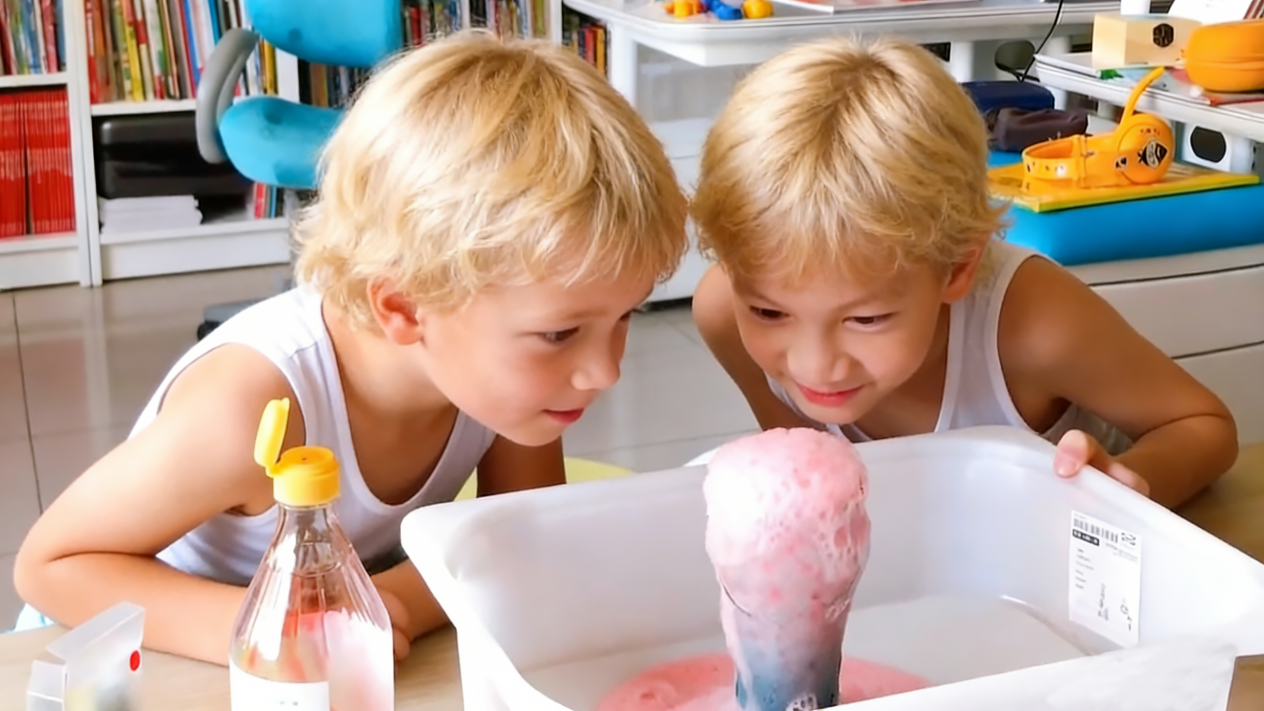
Explanation: Baking soda is an alkaline substance. The acidity of vinegar reacts with the baking soda to produce carbon dioxide gas, thus creating bubbles. This is a fun and simple way to demonstrate acid-base chemical reactions. Furthermore, to make it more interesting, you can also ask children to name other potentially effective acidic beverages, such as citrus drinks and lemonade, and compare the chemical reactions of each beverage. Click here to see its practical effect!
Explore Our STEAM Toys Collection
Nowadays, it's really not easy to get children to put down the screens and electronic devices that we can no longer do without. But for children, nothing is more meaningful and fulfilling than making things by themselves. Of course, it would be even better if they could also learn something new in this process!
If you've already tried all the science experiments available, perhaps it's time to get a new STEAM toy! Our STEAM toys include kids' secret notebooks, kids' learning laptop, kids' smart sleep clock sleep trainers, and other product categories covering educational games (kids' smart watches, kids' cameras), allowing children to learn through hands-on games. Visit our website to check them out.

